
The Chemistry of Crystallization: Connecting Science and Culture
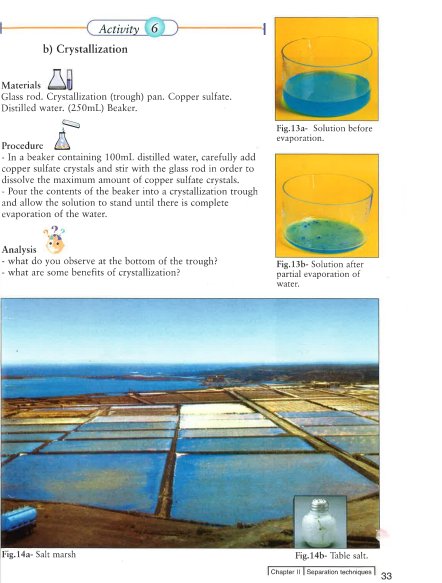
In the 7th grade Lebanese chemistry curriculum, one of the central topics in the chapter on separation techniques is crystallization. According to McGraw-Hill, crystallization involves separating a solid-phase precipitate from a solution, melt, vapor, or another solid phase. The concept is introduced in the Lebanese student book through an image of a salt marsh, illustrating the natural crystallization of salt within sea beds.
Why This Chapter?
You may wonder why I chose this specific chapter or why I focused on the image of the salt marsh. Let me pause here and invite you to observe these photos:
- Grade 7 Chemistry Book Image: The textbook includes a generic image of salt pans but does not specify its location or cultural significance.
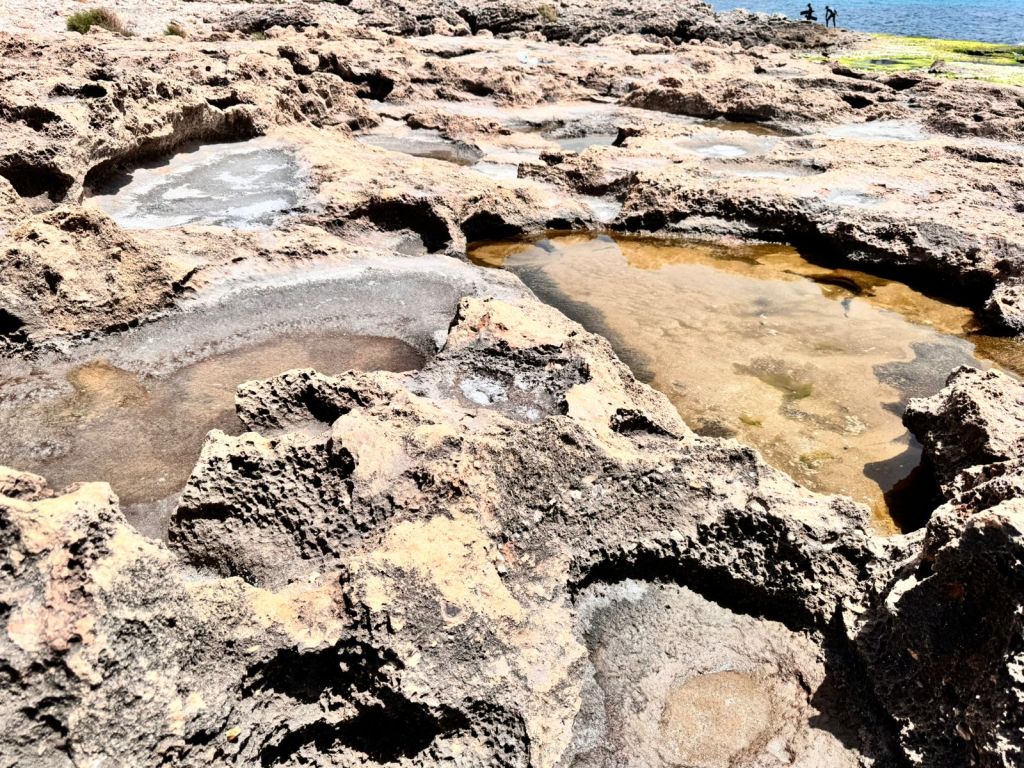
- Natural Crystallization in Anfeh: A stunning example of salt formation observed during my recent trip to the salt marshes in Anfeh, a town in the Koura district of North Lebanon.
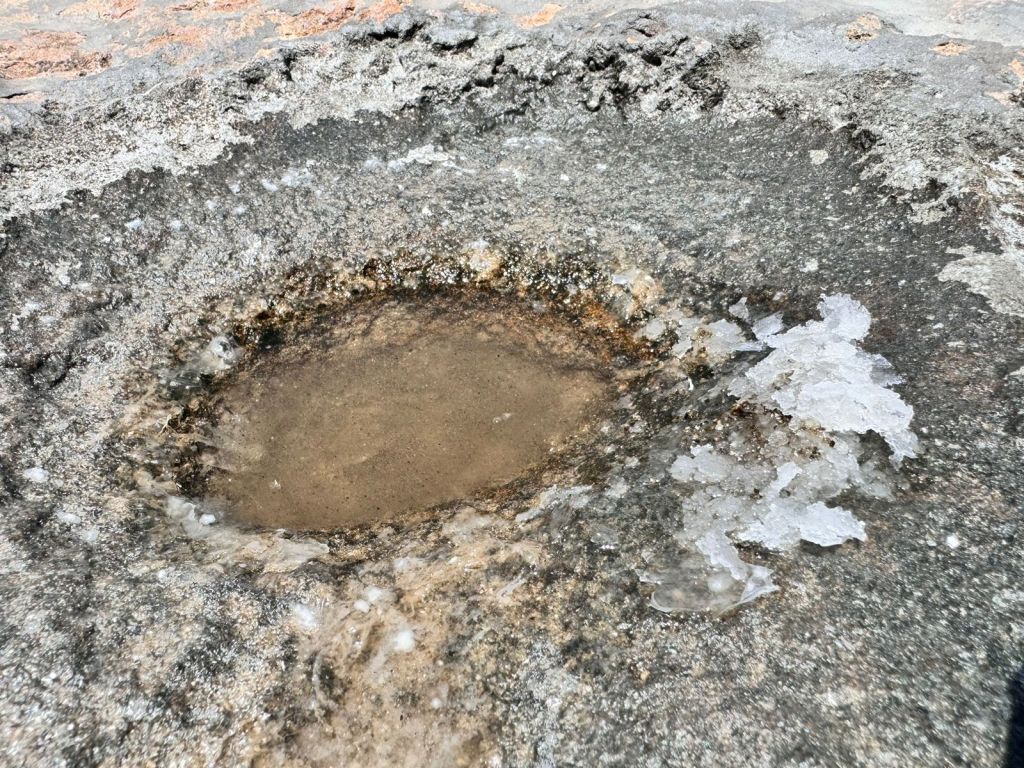
- Close-up View of Crystallization: A detailed look at the intricate salt crystals forming naturally in the Anfeh salt marshes.
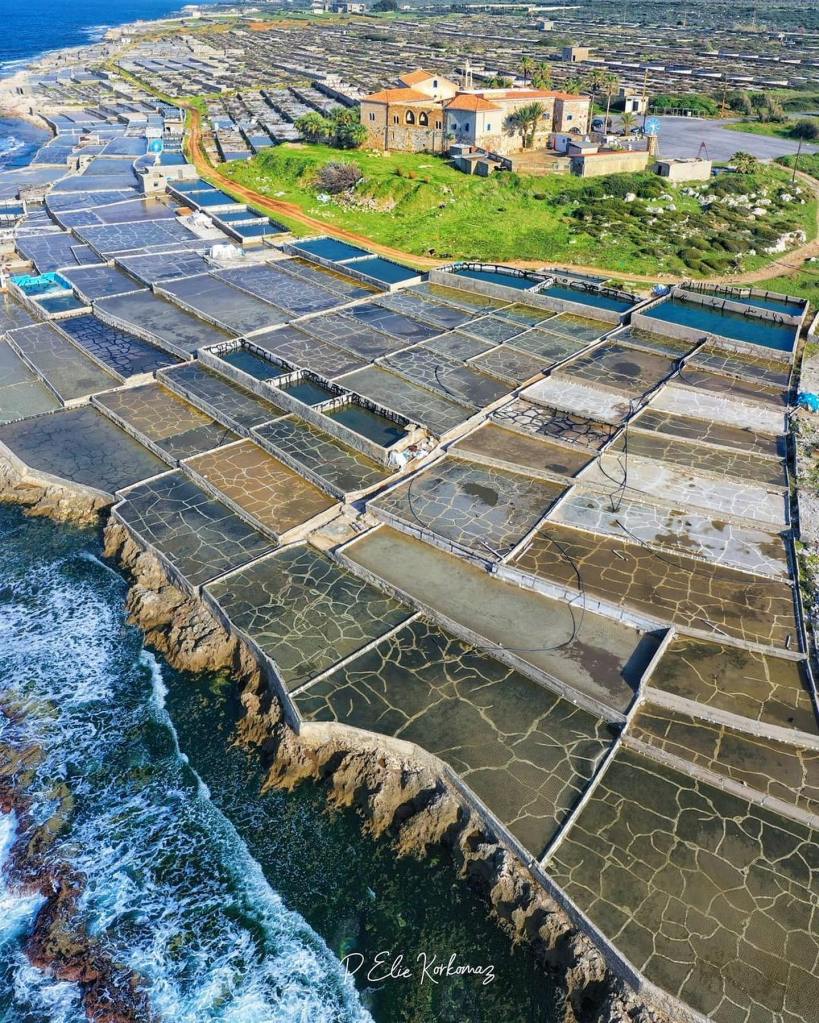
- Anfeh’s Functioning Salt Pans (‘Melle7at’): A centuries-old practice that continues to thrive along Lebanon’s coastline.
While the student book references salt pans, it makes no mention of Anfeh or Lebanon’s rich heritage in this industry. Generations of students have likely studied this chapter without knowing that Lebanon’s coastline has been a hub for salt production for centuries. Just a small addition to the textbook could create a meaningful connection between students’ learning and their cultural heritage.
Bridging Education and Emotion
Educators agree that emotion is integral to learning. Cognitive skills such as critical thinking and problem-solving are enhanced when learning resonates with students on a personal level. Including examples from daily life, or using photos and videos, can help students connect emotionally to the material.
Imagine if schools organized field trips to local salt pans, where workers could demonstrate the salt production process. Students would witness firsthand how the principles of evaporation and crystallization are applied in a real-world context. Such experiences not only enhance understanding but also instill pride in Lebanon’s cultural and scientific heritage.
The History and Science of Salt Production
Lebanon’s coastline has long been a center for salt production. The salt basins, known locally as ‘salinas’ or ‘melle7at’ (ملاحات in Arabic), were ingeniously designed to harvest salt from seawater using the sun’s heat.
The process begins with seawater, which contains approximately 3.5% salt, being channeled into shallow ponds. Under the heat of the sun, the water evaporates, leaving behind salt crystals. This natural demonstration of evaporation and crystallization principles highlights the ingenuity of ancient salt producers.
While modern salt production has advanced with technology, the core principles remain the same. Salt is still harvested from seawater and underground deposits using methods that rely on evaporation and crystallization. Each grain of salt represents a blend of natural processes and centuries-old human ingenuity.
Hands-On Learning Activity
Want to experience this process yourself? Try this simple activity at home:
- Dissolve table salt in warm water.
- Pour the solution into a shallow dish.
- Place the dish in a sunny spot.
- Over the next few days, observe as the water evaporates, leaving behind salt crystals.
This hands-on experiment offers a glimpse into the ancient art of salt production and makes abstract concepts more tangible.
A Call to Action
The next time you sprinkle salt on your food, remember the journey it has taken. It travels from the ocean, through the salt pans, to your table. Reflect on the cultural and scientific legacy behind this essential mineral. How does understanding its story change your perspective on everyday items?
Let us advocate for an education system that connects learning to our life and honors our cultural heritage. By embedding real-life examples into the curriculum, we inspire students. They will value their local traditions and engage more deeply with their studies. Whether you are a parent or an educator, take the time to explore these connections and share them with the younger generation. Together, we can make learning both meaningful and memorable.

 Neo Vision College