
-
5 steps to make asynchronous learning student centered interactive learning.
Distance Learning has become the prevailing mode of learning for the majority of students during the pandemic. The two forms of distance learning are asynchronous learning and synchronous Learning.

Many people, after experiencing the synchronous learning for the previous two years, believe that it is beneficial. Especially if teachers plan and implement interactive sessions with the 5 E model and active learning strategies such as the Kagan strategies . On the other hand, many parents and students still consider asynchronous learning an ineffective learning and they classify it as assignments that must not introduce new concepts. How can we as educators change this misunderstanding?
What are the 5 steps to make asynchronous learning student centered interactive and effective learning?
Plan for asynchronous learning using the 5 E model.
# 1- Engage students using an interactive tool Google slide, Padlet, Jamboard, etc. by a brainstorming question.
Catch your students attention from the start. Post something they are curious about and interested in. Let them Brainstorm for the posted question in one place using any of the above tools. Your students will get inspired by their friends interaction!
#2- Push your students to explore the concept at hand.
Provide your students with online resources that help them explore safely. This can be: online articles, videos, recorded sessions, animations, stimulations, online games. etc. You can ask them to work individually or as team. They can record their findings on any of the the interactive tools listed above.
#3 Now it is the time to explain.
Who can do this part? The teacher, the student or any educational material can do this part.
You can provide students with a place to post their questions in the go. Afterwards, you can either ask for peer help to answer the questions or you can do it yourself. It is education! Always Light a fire!
#4 Here, comes the best part where you have to elaborate on the studied concept.
Extend and elaborate by connecting the concepts to daily life situations. Also, you can differentiate and elaborate based on students need and interest! Students exploration will inspire you in this step!
#5 Finally, the evaluation part.
Actually, I see this part in every step. It is an ongoing process that will help students in their learning and will help you to modify your teaching.
But , who said, you are the only one who will do this part?! Always think of self evaluation and peer evaluation!
Until my next blog, happy learning!
Neyoulla
-
Inquiry-Based learning versus Hands-On Learning.
Throughout the course of my educational journey, I’ve often encountered novice teachers conflating inquiry-based learning with hands-on learning. The majority of them categorize all hands-on pedagogical activities as inquiry-based learning. This stems from a misunderstanding of the differences and commonalities between the two instructional strategies. Hence, there is a need for rigorous identification of each one.

Teachers must realize that inquiry-based learning is a pedagogical approach that has its roots in scientific methods. It urges kids to transform a problem into an investigable question. They then navigate this question by formulating a hypothesis. Next, they gather information and conduct experiments. They collect data and analyze the results. Finally, they evaluate and draw conclusions. This process may be repeated at any point in the investigation process until kids reach a reasonable solution. Afterwards, they communicate their findings to the targeted audience. At each stage of inquiry-based learning, children’s innate curiosity drives them to continuously ask questions. They investigate to construct meaning and satisfy their thirst for knowledge. The investigable problem arises from a daily life observation, a provocative statement, an area of interest, teacher-generated prompts, etc., and hence the type of inquiry differs according to the level of complexity.
On the other hand, hands-on learning refers to any type of learning where students learn by doing. It involves actively participating in the learning process. Yet, in this type of learning, students can be doing their learning without investigating a problem and trying to find its solution. This type of learning involves activities that actively engage kids in the tasks. Examples include working with manipulative, building structures, and doing experiments. It does not necessarily include structured inquiry components.
Moreover, it is crucial to note that the two instructional strategies overlap. Inquiry is a form of hands-on learning in which the learner acts as a scientist. However, during many aspects of hands-on learning, students actively engage in the learning process without wearing the “inquirer hat” by asking “WHY?”, “How?” and “What if?” questions.

I understand the conflict at the level of novice teachers. Both hands-on learning and inquiry-based learning are built on the principle of learning by doing. Now that teachers realize inquiry-based learning has the scientific method at its base, it is easier for them to differentiate. Hands-on learning lacks this foundational connection.
As aforementioned, kids can go through a hands-on activity without having the mind-on part that triggers students’ critical thinking. Thus, inquiry-based learning transcends hands-on learning by empowering students to act like scientists. Still, many teachers are reluctant to embrace inquiry-based learning. There are mainly two factors for this. First, their educational background. These teachers studied with traditional teaching techniques and haven’t experienced inquiry-based learning as students. Second, teachers feel furious at the unexpected questions they face during inquiry-based learning. Some of these questions challenge teachers. In the course of my educational journey, I have encountered many teachers who, directly after being inspired by the inquiry strategy in a particular professional development program, adopted inquiry in their classrooms. Then these same teachers drifted back to the comfort zone of traditional teaching approaches. Here, they were less likely to face unexpected, off-script questions from students. They were more likely to have students controlled by them. But is this what we seek from education?
On the bright side, it is good to mention that many experienced teachers use inquiry-based learning in tandem with hands-on learning. This is a great opportunity for students. The hands-on part plays a significant role in revealing their misconceptions while they investigate the topic at hand.
Finally, the educational system must empower teachers to embrace and integrate inquiry-based learning. Especially “open inquiry,” due to its positive impact on students’ learning.
-
5 reasons to enrich your lesson plan with visual representations!
-photo by me-
Preparing a lesson plan with its basic elements (lesson objectives, standards’ alignment; NGSS and common core standards, students’ background and prerequisites, needed lesson materials, lesson procedure, timing, transitions between activities, sequencing, differentiation and assessment) is crucial for a successful learning environment. Adding to this, enriching the lesson plan with visual representations and assuring the adequate implementations takes your lesson to the next level and lead to a for a more effective, efficient and engaging lesson.
First, what are visual representations?
Visual representations can be any of the followings: photos, diagrams, images, schema ,charts, graphs, tables, models, concept maps, animations, avatars, comics, illustrations and icons. The choice of visuals rely basically on the lesson needs and requirements, and on students’ age level!
Why do we advice to incorporate visual representations in lesson plans?
Incorporating visual representations into the different steps of the learning process helps :
- in transmitting and processing of the knowledge. Humans are 90 % visual beings by nature; 90 percent of information transmitted to our brain is visual. We process visual data 60,000 times faster than text.
- students in understanding complex concepts. Visual representations show more things. They can communicate the most complex concepts in the most comprehendible ways. Moreover, visual representations can be used the other way round where students develop their own visual representations to demonstrate their understanding of complex concepts.
- in increasing students’ motivation. Visuals grab kids attention. They are more appealing to kids than plain texts. They increase students’ interest and are related to the kids’ visual information world
- in enhancing students’ working memory and in creating enduring understandings. Visuals summarize content into smaller chunks that make the working memory more efficient.
- relating the concepts to real life situations. Representations are the most realistic models of real life. They quickly triggers the brain and connect to reality.
-
4 Tips to Make Back to School Easy after Winter Vacation!
I am excited to go back to school after a long winter vacation, eager to see my colleagues and my students again! However, I realize that going back to classroom routines and rules is not easy for both teachers and students after this prolonged school closure ( We had an extended winter vacation due to Covid and snow in our region). Teachers have to put in mind that this day is a mini first day of school all over again especially for kids!
Here are four tips to make the transition easier for both of you!
1- Greet your students and check their wellbeing! Ask questions that initiate positive communication among students. Some kids may have this typical first-day jitters! Others are outgoing and want to chat with each other! Take the lead and organize for a conversation that pushes all to communicate! Make it a useful discussion! Don’t miss the opportunity!
Remember to keep it organized!
2- Remind them of Rules and routines. Go back to the rules and routines you set before the vacations! It can be a good restart for you if you missed any before! Reinforce rules and routines through all the session! Don’t forget to be tender and firm at the same time!
3- Check the challenges students faced with technology during asynchronous learning. Many parents struggle with technology! Check this with your students! Ask them about the challenges they or their parents faced with technology! Address these challenges to the whole class! Train students to overcome these challenges ! Take the opportunity of being face to face with students to address the tech challenges! Guiding students who grow in the digital age may sometimes help more than guiding their parents!
4- Now it is time for the brainstorming to check students ‘understanding and accomplishment for the objectives and skills introduced during asynchronous learning! Use techniques that help students participate! Ask questions that make them safe to answer! Encourage them on the go! Unlock your students’ potentials with your smart questions!
Goodbye for now! School day will start in a while!
Enjoy it and stay safe!

On my way to school! 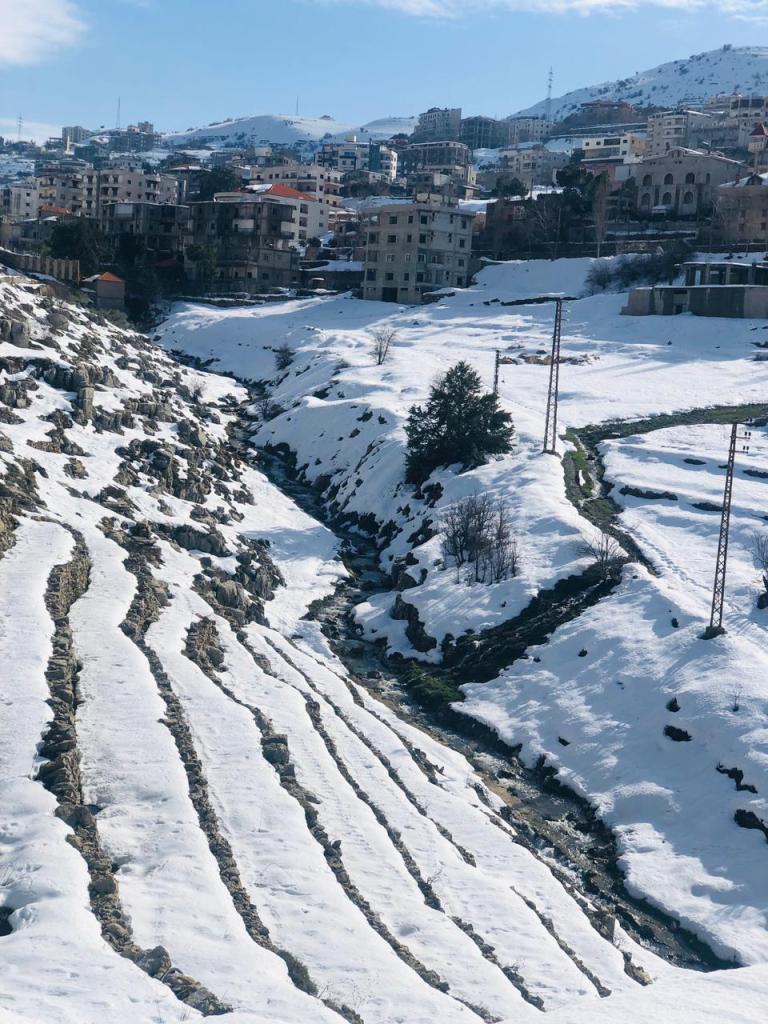
The view from my office! 


Back home ! I took these pictures while going to school and then back home! -
Drama as an Effective Pedagogical Tool in Teaching Science
How does Art Impact the Teaching of Science?
Many may ask how science teaching is related to drama? And even how science teaching is related to art? First we will try to uncover how art impacts the teaching of science. Frazier and Caemmerer (2014) mentioned that immense benefits for students’ learning arise from merging the practices of art and science. Integrating diverse modes of investigation and representation provoked students’ deeper thinking. The authors declared that students engaged fully in the approach (teaching science by using art) and clarified that it fulfilled their expectations and increased their engagement and sense of ownership. Besides, Frazier and Caemmerer (2014) articulated in a clear manner why to consider the integration of art in science teaching, they said: “Because design, problem solving, experience and familiarity with phenomena, and creative expression are indispensable aspects of art, it makes sense to consider the integration of art into this broader view of science” (p. 43). Adding to this, in the article “Using the Arts to Enhance Science Learning” Bort (2007) mentioned that she used songs, arts and crafts, drama, and body motions to enhance student’s learning in life science and indulge them in enjoyable activities. She also revealed that students preferred these activities to lab work and that they helped them better remember science concepts.
As a practitioner in the domain for more than twenty years I support that students remember science concepts better when they are being taught by using art. A science teacher, who was my student, told me recently the details of a science drama that we performed as a chemistry activity in grade nine, twelve years ago. She disclosed that this activity inspired her in teaching science using art, which is confirmed by Dorion (2016) who asserted that teachers’ interest is inspired by their exposure to positive experiences of drama in science. Additionally, another student told me, when we met in an occasion, that he still remembers the song they sang in a science lesson when he was my student ten years ago. The previous two anecdotes support that using arts enhances science learning.
From another point of view, using art in teaching science is a beneficial integration between different subject matters. It connects different subject matters and shows how one subject matter can be used as a tool to benefit the other. Flinders (2013) referred to Alfred North Whitehead that criticized the “fatal disconnection of subjects, which kills the vitality of our modern curriculum” (p.400). Hence, this integration between art and science bridges the two subject matters ensuring the vitality of the curriculum on one hand and enhancing science teaching-learning process on the other hand.
Why Drama is an Effective Tool for Teaching Science?
Drama is a constructivist teaching method that has been promoted as a productive way and active approach to learning science. Stevenson (2014) supported this by referring to drama as an implicit (active) learning situation, being truly engaging for students. Furthermore, drama develops the learning of concepts, understanding the nature of science and appreciation of science’s relationship with society (Braund, 2015). The social constructivists through history have claimed that the construction of knowledge is fostered by social interaction through the verbal and nonverbal communication in the integrated drama (Ceylan et al., 2015). Additionally, (Ceylan et al., 2015) stated that: “According to the Vygotsky’s theory, social interactions enable learners to internalize difficult problems, complex situations, and complicated processes (Vygotsky, 1978)” (P. 8).
Dorion (2016) considered that a drama-based approach is a potentially rich classroom resource for interactive and imaginative learning. Students will think out of the box and use their imagination to create pretend and made-believe science scenes. They will tackle the scientific concept from all its sides in order to be able to manipulate it into a scenario, which boosts their understanding of the concept and reveals their hidden misconceptions. Additionally, teachers themselves may create the scene and use it to teach a scientific concept in an environment that triggers students’ imagination. According to Conn (2012), “By inventing curiosity-provoking scenarios that require students to apply science concepts and processes as integral and indispensable elements, science teachers become the dramatists who capture students’ imaginations” (P.63).
In the article “Science Through Drama: A multiple Case Exploration of the Characteristics of Drama Activities Used in Secondary Science Lessons” Dorion (2016) declared that twenty years of research has indicated that the use of cross-curricular drama in secondary science enables learning of affective, cognitive and procedural knowledge. Specifically, he referred to Vygotskian and Bakhtinian researchers that suggest that a highly dialogic learning environment helps, through complex negotiations of meaning, to develop knowledge development. This matches Stevenson (2014) suggestion that the educative experiences carried in using drama in teaching science involved both the cognitive and affective domains. Additionally, Ødegaard (2003) after describing and applying the eco-system role-play used in her research, she mentioned that the affective domain has been brought into play and created a sense of responsibility in environmental matters.
Drama has been linked to the theories of preferred learning styles and in particular to Gardner’s (1983) body/ kinesthetic intelligence (Smith, 2006; Stevenson, 2014). They revealed that drama is a significant way of learning especially to the ‘body/kinesthetic’ learners. To add, Overton and Chatzichristodoulou (2010) cited that “teaching of science through the performing arts involves a combination of visual, auditory and kinaesthetic learning” (p.3873). Therefore, this combination of drama and science teaching is a way to broaden students’ horizon by approaching varied learning styles.
Drama enables meaningful learning, promotes opportunities for “interactive dialogue” and student-centered discourse, and empowers students with a sense of ownership that triggers their motivation to learn science (Dorion, 2016). Adding to this, Stevenson (2014) confirmed that drama in science empowers students with a sense of ownership mentioning that drama pedagogy, as a tool in science learning, empowers students with choice, freedom and a sense of belonging.
Bearing in mind “The Noble Gas” drama activity that grade nine students performed in one of my chemistry classes, I see that drama based activities in science classes empower students with choice, freedom and the sense of belonging. In that drama activity students, in groups, wrote the script of the play and chose the characters. They wore neck badges that they prepared to identify their roles in the play. Students enjoyed the drama and showed a distinguished sense of responsibility while writing and performing it. They mastered the ability to choose their roles and express their acts to the extent that they became a part of the activity and consequently a part of the learning process. This increased their sense of belonging to the class as a whole and to the subject matter in particular. The overall activity disclosed hidden abilities and skills among some students and boosted their performance in the free and open classroom environment.
Drama brings real life into the classroom thus makes learning relevant to students, which impresses and inspires them to achieve highly. Students always question the importance of some scientific concepts in their daily lives. They frequently ask these questions: Why do we have to study this concept? How does it help us in our daily life? Using drama in the classroom bridges real life situations with scientific concepts. Karakas (2012) proclaimed that integrating drama in science teaching sustained students’ interest through out the activities being related to daily life experience. Stevenson (2014) further asserted this saying that drama made experiences seems real by connecting sciences to the real world and contemporary issues. Moreover, Ceylan et al. (2015) confirmed that creative drama based instruction has a great potential to provide a framework to relate daily life experiences with the learning process.
Many researchers comprehended that drama bridges the gap between concrete and abstract understanding of scientific concepts. Karakas (2012) cited that role-play helps bridging the gap between concrete and abstract understanding of scientific concepts among students. This agrees with Ceylan et al. (2015) who stated that acting creatively on abstract concepts in science enhanced students’ engagement and understanding. Further, Braund (2015) specified that the use of analogy and metaphor makes the abstract ideas and theories of science more plausible. I recall one of the dramas in a chemistry class in grade ten where students presented in a play the chemical bonding in compounds. Preforming this play they transformed an abstract concept that can’t be visualized by students in the laboratory into an interactive and meaningful show.
Stevenson (2014) stated that using drama to teach science has a dynamic effect on learners, reflected in their complete engagement in the assigned roles. They engage fully in drama-based activities using their senses, facial expressions and body language to act the scene. The author expressed her admiration to the level of engagement and motivation among the students and their strong emotional reactions while performing drama in science classes. This agrees with Frazier and Caemmerer (2014), Braund (2015) and Ceylan et al. (2015) who mentioned that the active inclusion of art fostered student’s engagement in doing science. Students engage in science arguments and dialogues, which are free spaces for them to ask their questions about the subject matter and learn freely from their classmates and the teacher. Likewise, Conn (2012) emphasized the relation between emotions, engagement and learning by saying that learning is optimized with emotionally charged and imaginatively engaging knowledge.
Stevenson (2014) noted the benefits of using drama as a pedagogical tool in science learning through enhancing collaborative and cooperative learning. Students in this approach enter into debate and discussion and engage in collaborative investigations. Drama brings students together, allowing them to collaborate and cooperate to develop scenes and to find the most adequate role for each partner in accordance to the character that best fits him/her. This opens room for continuous discussions and sharing of ideas among the participants in the group. Collaboration and cooperation are two indispensable skills for students to withstand the demands of their future life. Furthermore, Stevenson (2014) affirmed that the integration between science and drama nurtured the harmony and the strong relationships within the classroom. This creates a positive atmosphere within the classroom leading to an effective and prosperous learning environment.
Integrating drama into learning sciences incorporates fun and joy into the classroom. This provokes students’ excitement while learning sciences. When students connect to the concept emotionally they better understand it. Learning and teaching science through drama is recognized as an exciting and pedagogically sound approach (Smith, 2006). Students are eager for excitement at school, bringing it by the teacher to the class fascinates students and prevents them from misbehaving at class, thus helping in classroom management. Smith (2006) expressed clearly that one of the advantages of drama in science is creating a positive attitude towards science leading students to consider that science is fun. She added,
The very process of acting in a play that involves singing, dancing, getting dressed up and making props, can, in itself, be great fun for many children. We can, as teachers, ‘write into’ the script, those various fun aspects. (p. 36)
Likewise, Pantidos et al. (2001) concluded that dramatizing a scientific subject creates more favorable conditions for its approach. Consequently, students’ performance in science increases as a direct effect of their enjoyment of learning.
Studies revealed that teaching science using drama shifted students’ negative expectations of science learning to an enterprise embracing creativity (Braund, 2015). I believe that drama enriches the classroom with enjoyable activities that stimulates learning and opens rooms for students’ creativity and critical thinking. Likewise, Smith (2006) said that Science drama enables the successful integration of science concepts with skills such as creativity and literacy skills. From their side, Ceylan et al. (2015) referred to many researchers in literature (Walsh-Bowers, & Basso, 1999; Ariel, 2007; Gullat, 2007) who claimed that problem solving, critical thinking skills, linguistic and communicational skills, students’ self-efficacy, empathy, respect to other, reasoning skills, drawing conclusions, and formulating ideas are promoted by the creative drama activities.
Research identifies students’ increased understanding in the course of using drama in teaching science (Ødegaard, 2003; Ceylan et al., 2015). Students who are living a role and acting it will be a part of this role assuring their deep understanding for the concept they are dramatizing. Relatedly, Ceylan et al. (2015) showed that creative drama based instruction increased the performance of the students regarding their acquisition of the scientific concepts and removing the misconceptions related to these concepts. I consider that the interactions among the students while preforming drama-based activities boosted their understanding and thus performance in the subject matter. Ceylan et al. (2015) affirmed this by mentioning that according to social constructivists like Vygotsky learning occurs as result of the social interactions, which at the school level are manifested by collaboration with more capable peers.
To conclude, using drama as a pedagogical tool in teaching science enhanced social interactions among students, triggered students’ curiosity and imagination, addressed and enhanced different learning domains and styles, bridged real life situations with scientific concepts, bridged the gap between the abstract and concrete understandings, assured students’ effective engagement, developed collaborative and cooperative learning, incorporated fun and joy into the classroom and increased students’ understandings. It is not surprising, then, that teaching science by using drama as a pedagogical tool has been tackled by many researchers in the field during the recent years. Consequently, we recommend science teachers to use drama as a pedagogical tool in teaching science to enhance the effectiveness of science teaching-learning process.
How to Use Drama in teaching Science?
Odegaard (2003) identified different forms of organization in dramatic science activities. In one of the classifications, she categorized drama, according to the degree of the teachers’ involvement in creating the drama, into: explorative drama where students create the drama and set up their own roles, semi-structured drama (role play) where students and teachers create the drama, and structured drama where teachers initiate the drama and create it. Here, one must not underestimate students’ talents in creating drama since kids are used to pretend play activities. They are used to pretend play using their dolls to represent people and leaves to represent food. Pretend play spurs kids imagination and helps in developing their creativity. Just spend sometime watching kids while they are pretend playing to see where their imagination can take them. Using kids favorite childhood games in teaching will lead to genuine learning.
Braund (2015) mentioned that the full range of drama methods used to teach science includes theatre in science, scripted drama, predetermined role-play, mime, dance and movement. However, most of the examples he gave in his article are predetermined role-plays. On the other hand, Stevenson (2014) declared that Drama in science teaching could be in the form of creating a fictional profile, role-play, drawing and in-role writing. Also, Smith (2006) referred to different forms of drama “Science drama covers a range of experiences from the simple one-off role plays in the classroom, to a play, scripted, rehearsed and costumed, performed for the school community or public” (p. 36). Similarly Dorion (2009) mentioned two forms of drama improvisational role-plays and scripted performances. However, Ceylan et al. (2014) didn’t classify drama into different categories. They just revealed creative drama as one of the techniques used in drama, which includes according to the authors “performing improvisations about an event or a concept that were formed by participants’ past experience”. Moreover, they referred to role-playing, improvisations, and writing during the role-play as methods in creative drama.
As a practitioner in the domain, I consider that the teacher’s theoretical knowledge, practical knowledge, and pedagogical tact are at the base of her/his choice of the most effective type of drama. However, science teachers mostly use role-plays in the science classroom since they are not familiar with scripts. Here, I recommend science teachers to cooperate with art teachers to develop science scripts. However, Odegaard (2003)
considered that science teachers are capable of dramatizing science concepts,
Science teachers are seldom actors, but acting skills appear not to be a necessary requirement! The invaluable role the science teacher plays is guiding the students in their reflection after a drama activity about how their experience relates to their own life and their relationship to science. (p. 80)
In addition to cooperating with art teachers, science teachers can heavily rely on their students’ abilities to write scripts. Students can consult drama teachers or search the net to learn how to write scripts. Wiles and Bondi indicated that knowledge has become plentiful and widely disseminated because of technological advancement (Wiles & Bondi, 2011). Consequently, learners can no more be treated as passive receivers of knowledge in an era where the later is available to them from diverse technology resources. Students will surprise the teachers by their self- learning abilities. I recall many incidents from my classroom where students amazed me by the effective and efficient drama activities they prepared to explain and present scientific concepts. Once, in a chemistry class, I asked each group of students to explain to their friends, using drama, a type of chemical reaction. Students wrote a script in which the characters where the students themselves and different types of fruits; the fruits represented different elements and/ or compounds. Students were fully engaged during writing and acting the scripts. They were able to grab their friends’ attention during the whole performance. Moreover, students understood the scientific concept, and this was clearly shown in the afterward-formative evaluation. Hence, I recommend that teachers must believe in their students’ abilities and must give them the space to help in constructing their learning. Teachers in this global era must overcome all the obstacles that may face them in their genuine teaching. They must use diverse effective teaching methods to assure competing the various challenges that are facing students’ learning. Therefore, after analyzing the positive impacts of drama-based activities on learning science teachers must integrate drama in science teaching for the best of their students.
Conclusion
Finally, I hope, after examining the presented constructive impacts of using arts (in general) and drama (in particular) on teaching science, the different applicable and available forms of dramatic science activities, and the ease of implementing them, that science teachers will consider teaching science by using drama. From what have been preceded, I view that it is an art of teaching science to use art, specifically drama, as an effective pedagogical tool in teaching science.
-
Assessment and technology
An exemplary learning community.
 Neo Vision College